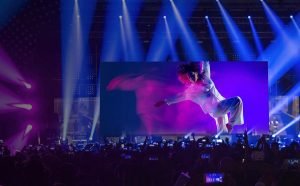
The LED display market in the United States has entered a new phase. It’s no longer just about replacing traditional billboards or upgrading screens—it’s about redefining how businesses use visual communication.
From retail flagships to virtual production studios, LED technology is now at the center of multiple fast-growing industries. What’s changed is not just the hardware, but the expectations behind it.
This article breaks down where the market is heading, what’s driving demand, and what buyers should really be paying attention to in 2026.
1. Market Overview: From “Display” to “Experience”
Over the past five years, the U.S. LED display market has shifted from price-driven decisions to value-driven investments.
Buyers today are asking different questions:
- How reliable is the system over 5+ years?
- Can it reduce operational costs?
- Does it support immersive or interactive content?
This is why LED displays are increasingly replacing LCD video walls and projection systems in high-end environments.
The key drivers behind this shift include:
- Rapid cost reduction in direct view LED
- Increased demand for seamless large-format visuals
- Growth of content-driven marketing
2. Retail: The Fastest-Growing Indoor Segment
Retail is one of the most active sectors for LED display adoption in the U.S.
Why Retailers Are Switching to LED
Compared to LCD video walls, LED displays offer:
- True seamless visuals (no bezel lines)
- Higher brightness for storefront visibility
- Flexible sizing and creative installation
In flagship stores, especially in major cities, LED is no longer a “nice-to-have”—it’s becoming standard.
What Actually Matters in Real Projects
From practical experience, retail clients tend to focus on:
- Pixel pitch (usually P1.2–P1.8)
- Color consistency across panels
- Ease of front maintenance
One common issue in retail installations is uneven color calibration after long-term use. This is often overlooked during the purchasing stage but becomes critical later.
3. DOOH Advertising: Still Growing, but More Selective
Digital Out-of-Home (DOOH) remains a strong driver for outdoor LED displays, especially in high-traffic urban areas.
However, the market is becoming more mature.
What’s Changing
Previously:
- Focus on maximum brightness
- Price-driven decisions
Now:
- Focus on energy efficiency
- Long-term maintenance cost
- Regulatory compliance
Key Technical Considerations
- Brightness: 5,000–10,000 nits depending on location
- Weather resistance: IP65 or higher
- Power consumption optimization
In many U.S. cities, stricter regulations on light pollution and energy usage are influencing project approvals.
4. Sports Venues: From Screens to Revenue Platforms
LED displays in sports venues are evolving beyond scoreboards.
Modern stadium arenas now apply LED systems for:
- Perimeter advertising boards
- Ribbon displays
- Center-hung video walls
LED screens for perimeter advertising often rely on rental LED displays due to their flexibility and fast installation.
The Real Shift
The focus is no longer just fan experience—it’s monetization.
Dynamic LED content allows:
- Real-time ad switching
- Sponsorship integration
- Targeted messaging
Engineering Challenges
Large-scale sports installations often involve:
- Complex structural integration
- Long operating hours
- High reliability requirements
Failure in such environments is not just technical—it directly impacts revenue.
5. Virtual Production (XR): The High-End Growth Engine
One of the most significant growth areas in the U.S. is virtual production.
LED walls are replacing green screens in film and broadcast studios, enabling real-time rendering environments.
Why LED Works Better
- Realistic lighting and reflections
- Reduced post-production time
- Better actor immersion
Technical Requirements (Where Many Projects Fail)
- Ultra-fine pixel pitch (≤ P1.2)
- High refresh rate (≥ 3840Hz)
- Accurate color reproduction
- Extremely low latency
In reality, many early-stage projects struggle with:
- Moiré effects
- Color mismatch on camera
- System integration issues
This is where supplier experience becomes critical—not just specs.
6. Technology Trends Driving the Market
Direct View LED (Below P1.5)
Now widely used in:
- Flagship stores
- Corporate environments
- Broadcast studios
- High-end retail
Learn more about direct view LED displays and how they improve visual performance.
COB (Chip-on-Board) Technology
COB is gaining attention due to:
- Better durability
- Improved surface protection
- Lower failure rates
However, it still comes with higher cost and manufacturing complexity.
Energy Efficiency
Energy consumption is becoming a key decision factor, especially for:
- Large-scale outdoor displays
- 24/7 operation environments
7. What U.S. Buyers Really Care About (Beyond Specs)
After working across multiple international projects, a clear pattern emerges.
- Reliability Over Price
Low-cost products often result in:
- Frequent maintenance
- Higher total cost of ownership
- Certifications
Typical requirements include:
- UL certification
- FCC compliance
Without these, project approval can be delayed or rejected.
- After-Sales Support
This is one of the most underestimated factors.
Buyers increasingly expect:
- Fast technical response
- Spare parts availability
- Remote diagnostics support
- Real Project Experience
Many suppliers look similar on paper. What sets them apart is:
- Proven installations
- Ability to handle complex scenarios
- Engineering problem-solving capability
Many suppliers look similar on paper, but working with an experienced manufacturer (see more on Cinstar Display) often makes a significant difference in complex projects.
8. Common Mistakes Buyers Still Make
Even experienced buyers sometimes overlook:
- Choosing pixel pitch based only on budget
- Ignoring long-term maintenance cost
- Underestimating installation complexity
- Not planning for future content upgrades
Avoiding these mistakes can significantly improve ROI.
Conclusions
The LED display market in the United States is no longer in an early growth stage—it’s entering a phase of specialization.
Different applications now require different solutions:
- Retail focuses on visual impact
- DOOH focuses on efficiency and compliance
- Sports focuses on monetization
- Virtual production demands extreme precision
For buyers, the key is not choosing the “best” LED display, but choosing the right solution for the specific application.